There’s a particular kind of heartbreak that hits Sydney homeowners around the five-year mark. You walk out to grab the bins, glance up at the front of the house, and there it is — a hairline crack running across the render like a crack in your favourite coffee mug. Not the end of the world. But definitely the start of a slippery slope if you ignore it.
Rendered walls are one of the best things you can do for a Sydney home. They smarten up tired brickwork, seal out the weather, and give your place that clean, contemporary look real estate photos love. But render isn’t “set and forget.” It’s more like a good pair of work boots — looked after properly, it’ll outlast almost anything the Sydney climate throws at it. Neglected, it’ll fall apart years before its time.
This guide walks through exactly how to keep rendered walls looking sharp for the long haul, why Sydney’s weather makes maintenance non-negotiable, and when it’s time to stop DIY-ing and call in a professional rendering service Sydney homeowners actually trust. That’s us — RDY Group Rendering — and we’ve patched, painted and pressure-washed enough Sydney homes to know exactly where render maintenance goes right and where it goes badly wrong.
Why Sydney’s Climate Is Genuinely Tough on Render
Every render maintenance article you’ll find talks about “harsh weather,” but let’s get specific about why Sydney is its own beast.
You’ve got salt-laden air rolling in off the coast in the eastern and northern beaches suburbs, chewing through render finishes faster than inland areas. You’ve got a UV index that regularly cracks double digits in summer, fading acrylic colours and drying out cement render until it loses flexibility. Then, just to keep things interesting, Sydney swings from baking hot afternoons to sudden downpours within the same week — that expansion and contraction is exactly what opens up hairline cracks in the first place.
Add humidity into the mix (hello, mould and algae on shaded, south-facing walls) and you’ve got a climate that’s basically testing your render’s patience year-round. This is precisely why generic maintenance advice written for Melbourne or Brisbane doesn’t always translate — Sydney conditions need a Sydney-specific approach, whether you’ve gone with cement rendering, acrylic, or a polystyrene system.
The Maintenance Basics: Cleaning Without Wrecking It
Cleaning is the single most underrated piece of render maintenance, and also the one most people get wrong. Here’s the drill:
- Frequency: A wash-down every 6 to 12 months keeps grime, pollution residue and salt build-up from settling into the surface. Coastal and shaded properties should lean toward the shorter end of that window.
- Method: Soft brush, warm water, and a mild detergent will handle 90% of everyday dirt. Save the big guns for actual stains.
- Pressure washers: Use with caution. Anything over roughly 500 PSI on cement render — or any pressure washer at all on acrylic — risks stripping the finish or forcing water behind the render, which causes far worse problems than the dirt you started with. If you’re going to pressure wash, use a fan-tip nozzle, keep a safe distance, and work top to bottom.
- Mould and algae: Don’t just scrub it off and call it done — that’s treating the symptom, not the cause. A proper fungicidal wash kills growth at the root so it doesn’t bounce back within a month.
If that sounds like more effort than your weekend’s worth, that’s fair. It’s also exactly the kind of job our crews knock over as part of routine care when clients bring us on for ongoing maintenance.
Spotting Trouble Before It Becomes Expensive
Cracks, bubbling, and flaking paint don’t appear overnight — they build up quietly until one day they’re impossible to ignore. A twice-yearly walk-around (autumn and spring are ideal, right when you’re already cleaning gutters) will catch most issues while they’re still cheap to fix.
Watch for:
- Hairline cracks — usually cosmetic if caught early, but they widen with every hot-cold cycle if left alone.
- Bubbling or blistering paint — almost always sign moisture has gotten in behind the render.
- Chalky, powdery surface (chalking) — a symptom of UV breakdown, common on north and west-facing walls.
- Discolouration or dark staining — often points to a drainage issue nearby, like a leaking gutter or garden bed banked up against the wall.
None of these mean your render’s had it. But every one of them is cheaper to fix this year than next year. That’s the whole logic behind render repair work — a same-day patch-up job today beats a full re-render in three years’ time.
House Render Patch Repair Sydney Homeowners Actually Need
Not every crack needs a tradesperson. Genuinely superficial hairline cracks in cement render can sometimes be handled with flexible acrylic filler and a steady hand. But there’s a line, and a lot of DIY jobs cross it without the homeowner realising.
Here’s when to put the trowel down and call a professional for house render patch repair Sydney conditions demand:
- The crack is wider than a hairline, or you can see it’s grown over a few months.
- Cracks are appearing in a pattern (diagonal, stepped, or radiating from windows and corners) — that can point to structural movement, not just surface weathering.
- There’s visible bubbling, soft or hollow-sounding patches when tapped, or render that’s actually come away from the wall.
- The damage is near penetrations — taps, pipes, aircon brackets — where a botched DIY patch can trap moisture rather than keep it out.
Mismatched patch jobs are one of the most common regrets we hear about. Getting the render mix, texture and colour to blend seamlessly takes a trained eye — otherwise you end up with a patchwork quilt effect that’s more obvious than the crack ever was.
Acrylic, Cement, or Polystyrene — Maintenance Isn’t One-Size-Fits-All
This is where a lot of general advice falls short. The three most common render systems in Sydney all age differently, and treating them the same is asking for trouble.
Cement render is tough, breathable and forgiving, but it’s rigid — which means it’s more prone to cracking as the house naturally moves and settles. Regular inspection for surface cracking and repointing where needed keeps it performing well for decades.
Acrylic render is flexible and comes pre-coloured, which is great news for fade resistance, but it’s more sensitive to pressure washing and harsh chemical cleaners than cement. If you’ve gone with acrylic rendering, stick to gentle cleaning methods and avoid anything abrasive.
Polystyrene render (EIFS-style systems) is brilliant for insulation and a lighter finish, but the coating layer is thinner than traditional render, so impact damage and moisture ingress at joints need quicker attention. Homes with polystyrene rendering benefit from an annual check of expansion joints and edge sealing especially.
Knowing which system is on your walls — and maintaining it accordingly — is half the battle. If you’re not sure what’s currently on your house, that’s a quick thing our team can identify on-site.
Wet Areas Are a Different Game Entirely
Two spots deserve their own callout because the stakes are higher: bathrooms and pools.
Bathroom render lives in a permanently humid, constantly wet environment, which means waterproofing quality matters more than almost anywhere else in the house. If you’ve had bathroom rendering done, keep an eye on grout lines, silicone seals around fixtures, and any signs of soft or discoloured render near the shower recess. Catching a failed seal early is a $200 fix. Catching it late is a gutted bathroom.
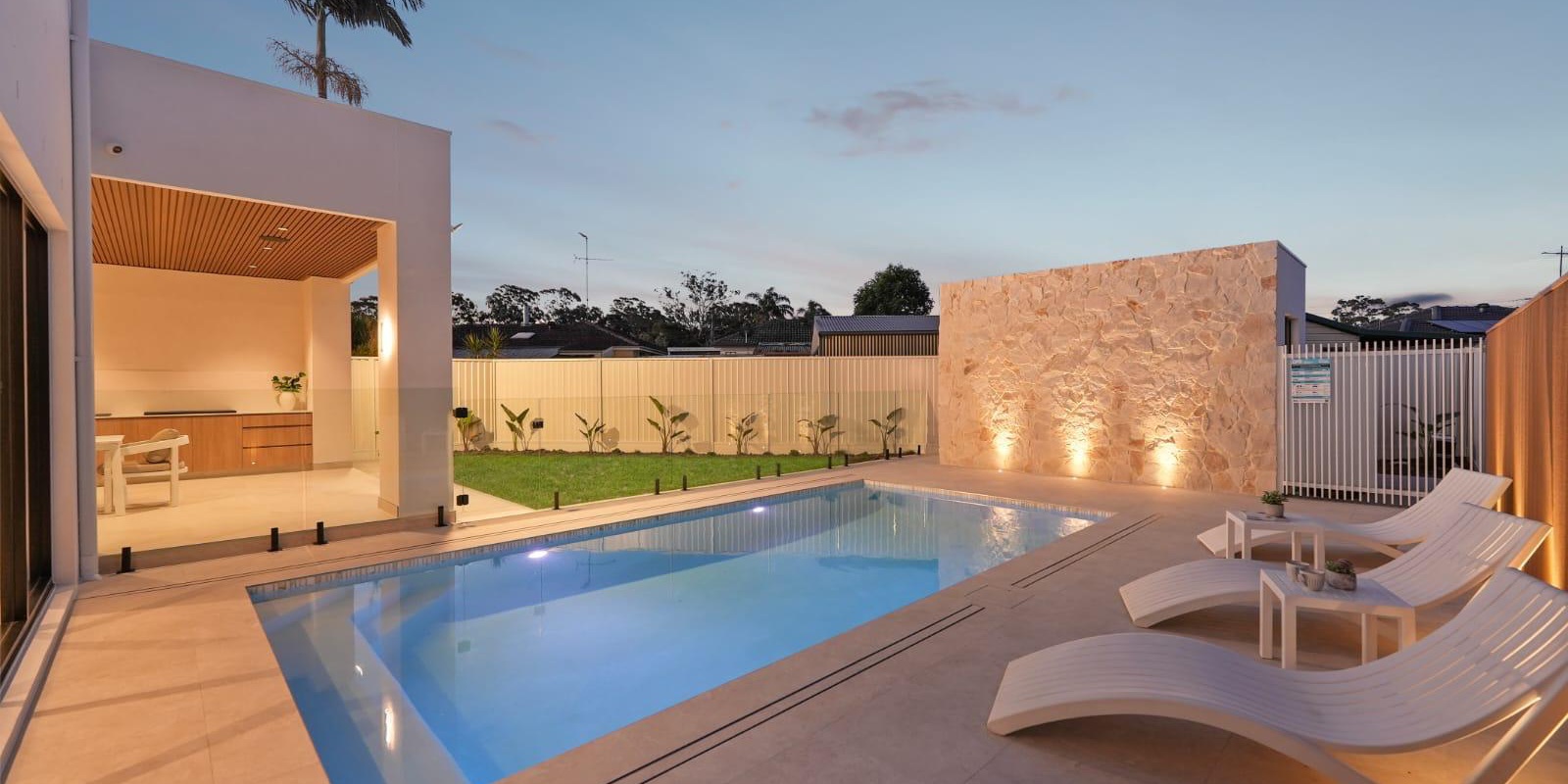
Pool render copes with chlorinated or salt water splashback daily, plus constant sun exposure on top of that. It needs more frequent inspection than standard exterior walls — chemical exposure accelerates surface wear in a way plain weather doesn’t. Our swimming pool rendering clients get the best results when they rinse pool surrounds after heavy chemical dosing and keep an eye out for etching or colour change around the waterline.
A Simple Seasonal Routine (Steal This)
If you want a system rather than remembering to “check it sometime,” here’s a rough calendar that works well for Sydney:
- Spring: Full wash-down, inspect for winter cracking, check gutters are directing water away from walls.
- Summer: Monitor UV-exposed walls for chalking or fading; keep garden beds and sprinklers clear of render.
- Autumn: Second inspection before the wet season, reseal any exposed joints or penetrations.
- Winter: Light spot-cleaning as needed; this is a good time to book repairs before summer heat makes render work trickier.
Stick to that and you’ll catch 90% of issues before they become expensive ones.
When It’s Time to Call in the Professionals
DIY maintenance covers a lot of ground, but there’s a point where a professional eye pays for itself. If you’re dealing with widespread cracking, water staining that keeps returning, render that sounds hollow when tapped, or you simply want a proper condition assessment before selling or renovating, that’s the moment to bring in a specialist rather than keep patching around the problem.
RDY Group Rendering handles the full spectrum — from routine maintenance advice through to full rendering services across Sydney, covering everything from a small patch-up to a full re-render. We’ve built our reputation on getting the finish right the first time, so it doesn’t become someone else’s maintenance headache in three years.
If your walls are telling you something, don’t wait for the crack to turn into a conversation with a structural engineer. Get in touch for a proper assessment, or have a browse through more render care guides on our blog while you’re at it.
FAQs: Rendered Wall Maintenance
How long does render actually last if it’s maintained properly? Well-maintained cement render can last 40-50 years, while acrylic systems typically run 15-25 years before a recoat is needed. The gap between those numbers and what actually happens on the ground almost always comes down to maintenance — or the lack of it.
Can I paint over cracked render myself, or will that make it worse? Painting over an unrepaired crack is one of the most common DIY mistakes we see. Paint has no structural strength, so the crack simply telegraphs back through within a season or two, and any moisture already trapped behind it gets sealed in rather than out. Cracks need to be raked out, filled with the correct flexible compound, and allowed to cure before repainting.
Is it worth getting a maintenance inspection even if the render looks fine? Yes, particularly for coastal or older properties. A lot of render damage — like moisture behind the surface or early-stage salt attack — isn’t visible until it’s well progressed. An annual once-over catches problems while they’re still a repair job, not a replacement job.
Does render need to be resealed, and how often? Most renders benefit from a fresh protective coat or sealant every 7-10 years, depending on sun and weather exposure. North and west-facing walls, and anything near the coast, generally need it sooner than sheltered, south-facing sections.
What’s the real difference between a patch repair and a full re-render? A patch repair fixes isolated damage — a crack, a small section of blown render, a damaged corner. A full re-render is warranted when damage is widespread, when the existing render has failed structurally (not just cosmetically), or when a colour/finish change is wanted across the whole property. A good contractor will tell you honestly which one you actually need rather than upselling.
Why does render near my downpipes and taps fail faster than the rest of the wall? Penetrations are the weak points in any render system. Every pipe, tap, bracket or vent creates a seam where water can find its way in if the sealant isn’t maintained. These spots deserve extra attention during every inspection — it’s a five-minute check that prevents a much bigger repair down the track.
Rendered walls reward the homeowners who look after them and punish the ones who don’t — there’s not much middle ground. A bit of regular cleaning, a proper eye for early warning signs, and knowing when to call in help will keep your walls looking factory-fresh for decades rather than years. And if you’d rather leave the climbing-around-on-ladders part to someone else, RDY Group Rendering is one call away.