By RDY Group Rendering | Sydney’s Local Rendering Specialists
Let’s be honest — most Sydney homeowners don’t think about their exterior walls until they absolutely have to. And by “absolutely have to,” we mean the render is peeling off in chunks, there’s a suspicious crack spreading like a slow-motion disaster, or the neighbour’s house just got a fresh coat and yours now looks like it survived a siege.
Sound familiar? You’re in the right place.
Whether you’re eyeing up a full exterior makeover, dealing with crumbling or damaged render that needs fixing fast, or just want to know what all the fuss is about — this guide covers everything. No jargon-heavy fluff. No “contact us for more information” every other paragraph. Just straight-up, practical knowledge from tradespeople who’ve been doing this across the Sydney metropolitan area for over 15 years.
What Even Is Wall Rendering? (And Why Should You Care?)
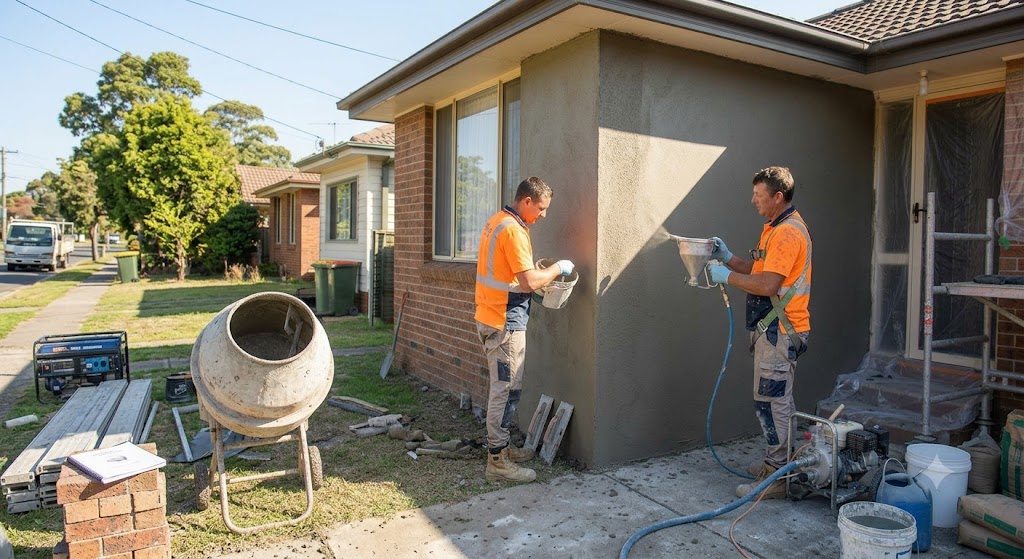
Rendering is the process of applying a coating — cement, acrylic, polystyrene, or a combination — directly to the exterior or interior walls of a building. Think of it as a protective skin for your home. It keeps moisture out, improves insulation, and turns a tired-looking brick box into something that actually makes people slow down as they drive past.
Sydney’s climate is no joke. Coastal salt air, scorching summers, unexpected downpours, and temperature swings play havoc with unprotected masonry. Without proper wall cladding or render, you’re looking at water ingress, crumbling mortar, efflorescence (that white powdery stuff that looks like your walls are sweating), and eventually, costly structural repairs.
Good rendering solves all of that — and it looks great while doing it.
The Different Types of Rendering: Which One’s Right for Your Place?
Not all render is created equal, and choosing the wrong type for your property is one of the most common (and expensive) mistakes Sydney homeowners make. Here’s a plain-English breakdown:
- Cement Rendering — The Old Faithful
Cement rendering is the bread-and-butter of the industry. Made from a mix of sand, cement, lime, and water, it’s been used on homes across Sydney for generations — and for good reason.
Why homeowners choose it:
- It’s the most affordable rendering option per square metre
- Incredibly durable — a properly applied cement render can last 20 to 30 years
- Works brilliantly on brick, concrete block, and masonry surfaces
- Acts as a natural insulator, keeping your home cooler in summer and warmer in winter (goodbye, sky-high power bills)
- Creates a waterproof barrier that prevents moisture from penetrating exterior walls
Who it’s best for: Properties with solid brick or block construction — including older Federation and Californian Bungalow homes that are super common across Sydney’s inner suburbs like Newtown, Leichhardt, and Marrickville.
One thing to watch: Cement render is less flexible than modern alternatives. On very old homes with slight structural movement, it can develop hairline cracks over time. That’s why application technique matters enormously — which is why you want experienced local renderers rather than someone who watched a YouTube tutorial last Tuesday.
Cost ballpark: Roughly $30 to $65 per square metre depending on surface condition, access, and finish type.
- Acrylic Rendering — The Modern Overachiever
Waterproof acrylic rendering has become increasingly popular across Sydney’s newer builds and renovation projects, and once you understand what it offers, it’s easy to see why.
Acrylic render contains acrylic polymers mixed into the render compound, giving it a flexibility that cement simply can’t match. It bends slightly with the natural movement of a building, which dramatically reduces cracking. It’s also UV resistant (important in a city that sees as much sun as Sydney does), water resistant, and resistant to mould and mildew — a genuine win in Sydney’s humid coastal climate.
Key advantages of acrylic rendering:
- Highly flexible — moves with your building instead of cracking against it
- Excellent waterproofing properties — keeps moisture where it belongs (outside)
- Faster drying and curing time than cement
- Available in a huge range of pre-mixed colours and textures — no painting needed
- Low ongoing maintenance requirements
- Works on a wider variety of surfaces including fibre cement sheeting and some existing rendered walls
Best suited for: Modern homes, renovations, properties near the coast or in areas with high moisture exposure, and anyone who wants a clean, contemporary finish with minimal upkeep.
Cost ballpark: $65 to $90 per square metre — higher than cement, but the reduced maintenance and longer colour retention often make it the more economical choice long-term.
- Polystyrene Rendering (EPS Cladding) — The Insulation Game-Changer
If energy efficiency is high on your priority list — and with Sydney energy costs being what they are, it absolutely should be — then polystyrene rendering deserves a serious look.
Also known as EPS (expanded polystyrene) rendering or insulated wall rendering, this system involves bonding polystyrene foam panels to the exterior of your home before applying a render finish coat over the top. The result is a dramatically improved thermal envelope around your home.
Why insulated wall rendering is worth considering:
- Significantly reduces heat transfer through exterior walls — your air conditioning actually works as intended
- Can reduce heating and cooling costs by a meaningful amount year-round
- Provides excellent sound insulation — particularly valuable if you’re near a busy road or flight path
- Lightweight — doesn’t add structural load to your building
- Can be used to update and modernise the appearance of a home without major structural work
- Works on both new builds and existing properties
This is particularly popular in Sydney’s western suburbs where summer temperatures regularly push past 40°C, and the difference between a rendered and non-rendered home is felt immediately when you walk through the front door.
Why Your Walls Are More Important Than You Think
Here’s something that doesn’t get talked about enough: the condition of your exterior walls directly affects your property’s market value.
Real estate agents across Sydney consistently report that freshly rendered homes sell faster and for more money. We’re talking potential value increases of 10% or more in competitive Sydney markets. On a $1.2 million home in the Inner West or Northern Beaches, that’s a significant number.
Beyond resale value, properly rendered exterior walls:
Protect against water damage — Water ingress is one of the most destructive forces a building faces. Once moisture gets behind your walls, you’re dealing with mould, rotting timber, rusting reinforcement, and eventually, structural compromise. A quality exterior render is your first line of defence.
Reduce maintenance costs — Painted brick and unprotected masonry need regular repainting and repointing. A rendered wall, properly sealed, can go a decade or more without significant maintenance.
Improve thermal comfort — Sydney’s climate swings between extremes. Rendered walls — particularly those with insulated systems — keep your home more comfortable year-round without hammering your energy bills.
Update your home’s appearance — Let’s be real: a freshly rendered home just looks better. That dated brick from 1987 can look completely contemporary with the right render finish.
The Rendering Process: What to Expect When You Book a Job
A lot of homeowners are nervous about booking a rendering job because they’re not sure what’s involved or how long it’ll take. Here’s what a professional job looks like from start to finish:
Step 1: Surface Inspection and Preparation
This is where good renderers separate themselves from the cowboys. Before a single trowel of render goes on your wall, the existing surface needs to be assessed and prepared. This means cleaning, removing loose material, filling holes, treating any moisture issues, and applying bonding agents where needed.
Skip this step and your render will fail. Simple as that.
Step 2: Scratch Coat Application
For cement rendering, the first coat (scratch coat) is applied and then literally scratched with a tool to create a keyed surface for the finish coat to bond to. This might seem like an odd extra step, but it’s what makes multi-coat render systems so durable.
Step 3: Finish Coat
The final coat determines the look and texture of your walls. Options include smooth float finish, fine texture, medium texture, or coarser finishes — each with different visual effects and practical properties.
Step 4: Curing
Render needs time to cure properly. In Sydney’s summer heat, this means keeping it slightly damp to prevent it drying out too fast and cracking. A professional renderer knows the right conditions and will advise on this.
Step 5: Painting or Sealing (if required)
Cement render typically gets painted, while acrylic render usually comes pre-coloured. If painting is required, your renderer may arrange this or leave it for a painter to follow.
A typical three-bedroom home in Sydney takes anywhere from two to five days for a full exterior render job. Larger homes or those needing significant surface preparation can take longer.
Damaged and Cracked Render: Don’t Ignore It
One of the most common calls we get is from homeowners who noticed a crack six months ago, figured it was just cosmetic, and have now discovered the damage behind it is considerably worse.
Render cracks aren’t always structural emergencies, but they’re never something to leave alone. Cracked or damaged render allows water to infiltrate the wall cavity, and from there the damage accelerates quickly — especially during Sydney’s wet season.
Common signs your render needs attention:
- Visible cracks (even hairline cracks can be entry points for moisture)
- Hollow sounds when you tap the wall (render delaminating from the substrate)
- Staining, efflorescence, or damp patches
- Render sections that have completely fallen away
- Bubbling or blistering beneath the surface
The good news is that professional render repair is far less expensive than a full re-render job — but only if you catch it early. A small repair patch done correctly will blend seamlessly and protect the rest of your render for years to come.
Pool Rendering: The Most Overlooked Upgrade in Sydney
If you’ve got a pool, you already know that Sydney’s outdoor lifestyle revolves around it for about eight months of the year. What you might not know is that pool render deteriorates faster than house render — constant water exposure, pool chemicals, UV, and thermal cycling all take a toll.
Swimming pool rendering in Sydney is a specialised service that requires different materials and techniques than exterior wall rendering. The render needs to be fully waterproof, chemically resistant, and able to handle the constant expansion and contraction that comes with pool temperature changes.
Signs your pool needs re-rendering include:
- Rough, pitted, or etched surface (uncomfortable on bare feet)
- Staining that can’t be removed by cleaning or chemicals
- Visible cracks in the shell
- Structural exposure where render has completely come away
- Fading or patchy colour
A freshly rendered pool doesn’t just look stunning — it’s also more hygienic (smooth surfaces harbour less algae and bacteria) and easier to maintain. It genuinely transforms how you use and enjoy your outdoor space.
Why Hire Local Renderers in Sydney Instead of Going National?
Here’s a genuine competitive advantage that doesn’t get talked about enough: local knowledge matters enormously in rendering.
Sydney’s geography is diverse. The coastal Eastern Suburbs deal with salt-laden air that accelerates corrosion and render degradation. The Hills District and Western Sydney face extreme summer heat. The inner suburbs are full of older Federation-era homes with different structural characteristics. The Blue Mountains fringe experiences freeze-thaw cycles that newer western suburbs don’t.
A rendering company that operates across all of Australia from a central office doesn’t know your specific suburb the way a Sydney-based team does. They don’t know which products perform best in your microclimate, which surface preparations work on the particular brick types common to your area, or which local building codes apply to your job.
RDY Group Rendering has been working across the Sydney metropolitan area for over 15 years. That kind of local, on-the-ground experience shows up in every job.
How to Choose the Right Sydney Rendering Company
The rendering industry — like most trades — has its fair share of operators who’ll take your deposit and deliver mediocre work. Here’s what to look for when comparing quotes:
Check for licensing and insurance — A licensed renderer in NSW operates under a builder’s licence through NSW Fair Trading. Don’t accept work from unlicensed operators regardless of how low the quote is. Insurance matters just as much — rendering involves working at height and with heavy materials.
Ask about their preparation process — Any renderer worth hiring will spend considerable time on surface preparation before touching a trowel. If the quote doesn’t mention prep work, ask specifically what it includes.
Look at their previous work — A legitimate rendering company will have a portfolio of completed jobs. Browse completed projects to see the quality and range of work they’ve done. Before-and-after photos are worth a thousand words.
Get at least three quotes — Not because cheapest is best, but because comparing quotes helps you understand what’s actually included. A suspiciously low quote almost always means cut corners somewhere in the process.
Read reviews — Look for Google reviews, not just testimonials on the company’s own website. What do their past customers actually say about communication, punctuality, and quality?
The Full Range of Services You Should Know About
A quality residential rendering company in Sydney should offer the full spectrum of services — not just new render application. Here’s what a comprehensive service offering looks like:
Cement rendering for traditional exteriors, boundary walls, fences, and retaining walls — the most cost-effective option for larger projects on solid masonry.
Acrylic rendering for modern finishes, renovation projects, and properties where flexibility and waterproofing are priorities — particularly along Sydney’s coastline.
Polystyrene or EPS rendering for thermal insulation upgrades — increasingly popular as energy costs rise and homeowners invest in making their homes more comfortable year-round.
Render repair and patching — addressing cracked, hollow, or falling render before it causes deeper damage to your home’s structure.
Swimming pool rendering — specialist waterproof rendering for pool shells, surrounds, and water features.
Bathroom rendering — interior waterproof rendering for wet areas, particularly for renovation projects or new builds.
You can explore the full range of services to understand what’s right for your specific project.
Frequently Asked Questions (That People Actually Ask)
How long does rendering take to dry? Cement render typically takes 24 to 48 hours to dry to touch, but full curing takes around 28 days. Acrylic render dries faster — sometimes within hours — but shouldn’t be painted or heavily exposed to water for at least 24 hours.
Can you render over existing render? Sometimes, but it depends on the condition of the existing surface. If the old render is sound and well-bonded, a new finish coat may be possible. If it’s hollow, cracked, or delaminating, it needs to come off first.
How long does render last? Quality cement render lasts 20 to 30 years with basic maintenance. Acrylic render can last similarly long, with better colour retention. The biggest factor is application quality — which is why hiring experienced professionals matters.
Does rendering increase home value? Consistently yes — particularly in Sydney’s competitive property market. A well-rendered home presents significantly better and can add genuine value to a sale.
Can I render myself? Technically. But rendering is a skill that takes years to develop properly. Mistakes in surface preparation or application technique don’t show themselves immediately — they show up 12 months later as cracks, delamination, or water damage. Most DIY render jobs end up costing more to fix than a professional job would have cost in the first place.
Ready to Transform Your Home’s Exterior?
Whether you’re planning a complete exterior makeover, need a damaged section repaired before the wet season hits, or you’re looking to add insulation and a fresh modern finish to an older property — the right team makes all the difference.
Get in touch with RDY Group Rendering for a free inspection and quote. We operate across the Sydney metropolitan area, we’re fully licensed and insured, and we’ve been doing this long enough to know exactly what your walls need — and what they don’t.
And if you’re still in the research phase, head over to the blog for more guides on specific rendering types, maintenance tips, and how to get the most out of your next property upgrade.
Your walls have been patient enough. Let’s get them sorted.


