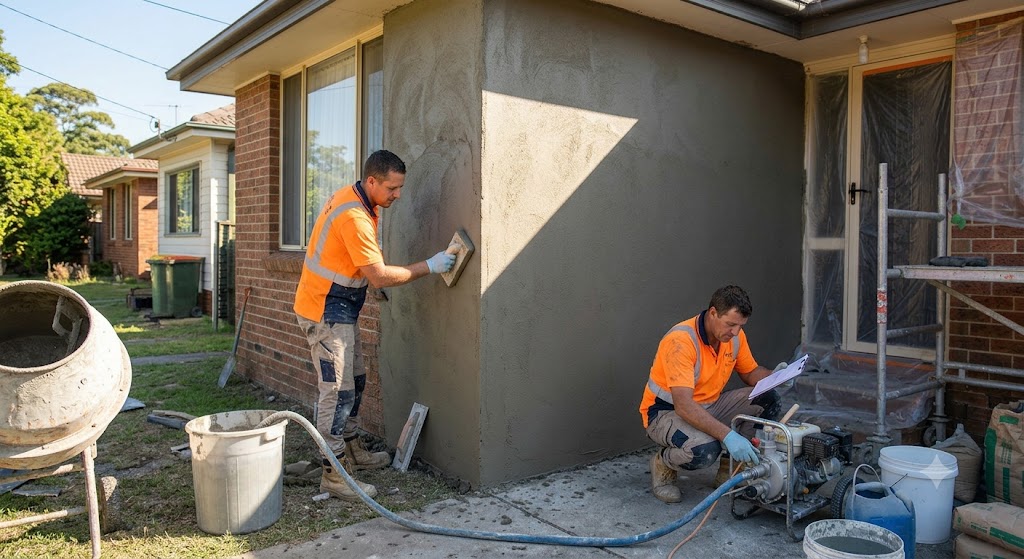
Sydney is a city obsessed with kerb appeal. We’ll happily drop ten grand on a feature wall and still argue with our neighbour about whose fence is uglier. But here’s the thing nobody tells you when you’re renovating: the render on your house is doing heavier lifting than almost anything else on the exterior. It’s not just the “paint job” your cousin thinks it is. It’s waterproofing, insulation, crack control and street cred, all in one skim coat.
And yet, so many Sydney homes are wearing render that’s cracking, drumming (that hollow “tok-tok” sound when you knock on it — not a good sign), or peeling off like a bad sunburn. Usually because someone went with the cheapest quote, not the right one.
This is where RDY Group Rendering comes in. We’re not here to sell you a miracle “one-coat fix” or disappear after the deposit clears. We render houses, bathrooms, pools, granny flats and the odd heritage terrace across Sydney, and we’ve seen enough dodgy patch jobs to know exactly what goes wrong and why. So grab a cuppa (or a VB, no judgement), because we’re about to walk you through everything you need to know about rendering in Sydney — the good, the bad, and the “why is my wall doing that.”
First Things First: What Even Is Rendering?
Rendering is the process of applying a protective, decorative coating — usually a mix of cement, sand, lime, or acrylic polymers — to a wall’s surface. Think of it as a raincoat for your brickwork. Done properly, it:
- Waterproofs external walls against Sydney’s “four seasons in one day” weather
- Hides ugly brickwork, old patch-ups, or mismatched extensions
- Adds insulation (especially with foam/polystyrene systems)
- Boosts resale value more than almost any other cosmetic reno
- Lets you actually choose a colour scheme instead of being stuck with brick-red forever
Done badly, it cracks within a year, traps moisture behind the wall, and turns your dream reno into a “why did I bother” situation. That’s the difference between a renderer who’s rushing to the next job and one who’s actually rendering Sydney properties for a living.
The Sydney Rendering Menu: More Options than a Thai Restaurant
One of the biggest mistakes homeowners make is assuming “rendering” is one product. It’s not. Picking the wrong system for your wall, your budget, or your climate exposure is the #1 reason renders fail early. Here’s the rundown.
Cement Rendering (The Old Reliable)
Cement rendering in Sydney is the traditional, tried-and-tested option — a sand, cement and lime mix applied over brick, block or concrete. It’s affordable, tough, and has been holding up Sydney homes since your grandparents’ day. The trade-off? It’s more rigid than acrylic, so on buildings that move a bit (think older homes, or ones near tree roots and clay soil), it’s more prone to hairline cracking if it isn’t applied and cured properly. Still one of the best cement rendering contractors Sydney has going, when it’s mixed right and given time to cure — not slapped on and rushed for the next job.
Acrylic Rendering (The Flexible Cousin)
Acrylic rendering swaps some of that rigidity for polymer flexibility, meaning it moves with the building instead of fighting it. That’s a big win for crack resistance, and it usually comes pre-coloured, so you skip a separate paint job down the track. If you’re after a genuine exterior acrylic rendering Sydney solution that isn’t going to spiderweb with cracks after the first hot summer, this is usually where we steer clients — especially on newer builds, extensions, or anything exposed to full sun.
Polystyrene / Foam Rendering (The Insulation Overachiever)
Polystyrene rendering — foam rendering, EIFS, whatever you want to call it — involves fixing polystyrene panels to the wall before rendering over the top. It’s lightweight, it’s brilliant for thermal performance (your air-con bill will thank you), and it’s popular on new builds and renovations where insulation upgrades matter. Foam rendering Sydney jobs need a properly qualified crew though, because the panel fixing and mesh work underneath is where cheap jobs cut corners — and that’s exactly where the cracks show up first.
Bathroom Rendering & Plastering (The Room Everyone Forgets)
Exterior walls get all the attention, but bathrooms cop the most abuse of any room in the house — steam, splashback, humidity, the lot. Bathroom rendering in Sydney is about creating a moisture-resistant, waterproof internal finish that won’t bubble, mould, or crack behind the tiles. If you’ve ever pulled up old tiles to find crumbling plaster and a mould situation you didn’t ask for, you’ll know why proper bathroom plastering Sydney work matters more than people think — it’s not glamorous, but it’s the difference between a reno that lasts and one you’re redoing in five years.
Swimming Pool Rendering & Plastering (Because Nobody Wants A Rough Pool Floor)
Pools are brutal on surfaces — constant water exposure, chemical balance swings, UV, the works. Swimming pool rendering typically uses an acrylic-boosted mix for flexibility and waterproofing, applied smooth enough that you’re not scraping your feet on the way to do laps. Swimming pool plastering Sydney jobs usually need replacing or resurfacing every 8-12 years depending on water chemistry and maintenance, so if your pool’s looking chalky, stained, or rough underfoot, that’s your cue.
Render Repair (The One Everyone Ignores Until It’s Expensive)
Cracks, drummy patches, water staining, bubbling paint — all signs your render has failed somewhere and needs attention before it gets worse. Render repair isn’t just cosmetic patch-up; done right, it involves removing the failed section back to a sound substrate, checking for moisture ingress behind it, and matching the texture so it doesn’t look like a patchwork quilt. A cracked render repair Sydney job done properly should be invisible once painted. A cracked render repair job done cheaply is the reason you’re googling this again in eighteen months.
Why Renders Crack, Peel or Go “Drummy” in the First Place
Sydney’s climate is part of the problem — we swing from baking humidity to sudden downpours, and our clay-heavy soils in the west and shrink-swell movement near sandstone in the east both put stress on rigid surfaces. But climate is only half the story. In our experience, render failures almost always come back to one of these:
- Rushed curing time — render needs time between coats. Skip that, and you get shrinkage cracks.
- Wrong system for the substrate — using a rigid cement mix on a wall that moves, or vice versa.
- No proper prep — rendering straight over dust, old paint, or unstable surfaces without bonding agents.
- Cheap materials with no mesh reinforcement in high-movement zones (corners, above windows, control joints).
- DIY jobs or handyman patch-ups that look fine for six months, then let go entirely.
If any of that sounds familiar, it might be time to stop patching and start asking why it keeps happening.
How to Pick A Renderer Without Getting Burnt
Sydney’s building trade has its fair share of cowboys, and rendering is no exception — it’s one of those jobs where a bad finish can look okay for six months before it starts falling apart, by which point the bloke who did it has “moved interstate.” Here’s what actually separates decent local renderers from the ones you’ll be chasing for a warranty claim:
- Licensing and insurance. Any legitimate renderer in NSW should hold the right building licence and public liability cover. Ask, don’t assume.
- A proper site inspection before quoting. If someone’s happy to give you a fixed price over the phone without looking at your walls, treat that as a red flag, not a bargain.
- Photos of past work on similar substrates. Rendering a project home is a different beast to a 1920s sandstone terrace. Ask to see jobs that match your property type.
- A written scope that specifies the system. “We’ll render your house” isn’t a scope. “Two-coat cement render with mesh reinforcement at movement joints, sponge finish” is.
- Realistic timelines. Curing takes time. If a quote promises a full re-render, cure and paint in two days flat, that’s a corner-cutting exercise waiting to happen.
We say all this not to talk ourselves up, but because we’ve been called in to fix enough “bargain” jobs to know the pattern. A render that’s done properly the first time, by a crew that actually understands the substrate, the climate exposure and the right system for the job, will cost less over ten years than a cheap patch job redone three times.
FAQs (The Questions We Get Asked On Every Second Job)
How much does rendering cost in Sydney? It varies with the system, wall condition and access, but as a rough guide, cement render typically runs cheaper per square metre than acrylic or texture coat, while foam/polystyrene sits in the middle once you factor in the insulation upside. Multi-storey homes cost more due to scaffolding. The only way to get an honest number is a site inspection — anyone quoting a fixed price over the phone without seeing your walls is guessing.
Is acrylic render better than cement render? “Better” depends on the job. Acrylic flexes more, resists cracking, and comes pre-coloured. Cement is cheaper upfront and has a long track record. For older homes with more movement, or full-sun exposure, we usually lean acrylic. For straightforward brick walls on a budget, cement still does the job.
How long does render take to dry/cure before painting? Cement render generally needs several weeks of curing before painting to avoid trapping moisture and causing bubbling later. Acrylic and texture coat systems are usually quicker since colour is built in. Rushing this step is one of the most common causes of early paint failure.
Can you render over old, cracked render? Sometimes, if the existing render is sound underneath — but if it’s drummy, hollow, or actively crumbling, rendering over it just hides the problem temporarily. Proper render repair means removing the failed sections first.
Do I need council approval to render my house in Sydney? For most standard residential re-renders, no — but heritage-listed properties, some strata buildings, and certain local council overlays can have restrictions on colour or finish. Worth a quick check with your council or strata manager before committing to a colour that might get you a please-explain letter.
How often does pool render or plaster need replacing? Typically every 8 to 12 years, depending on water chemistry, usage and how well it’s maintained. Signs it’s time include roughness underfoot, chalky staining, or visible cracking near the waterline.
Seen Enough Talk? Here’s the Proof
We could tell you we do great work all day, but nothing beats seeing it. Have a browse through our completed jobs across Sydney — from cracked cottage exteriors brought back to life, to full acrylic re-renders on new builds — over on our portfolio of finished projects. If you’re the type who reads the fine print (respect), we also break down more rendering topics, cost guides and maintenance tips over on our rendering blog.
Curious what else we get up to beyond the six specialties above? Have a look through our full range of rendering and plastering services — chances are, if it involves a wall, a wet area or a pool, we’ve rendered it.
The Bottom Line
Rendering isn’t just about making a wall look pretty for the next street-view photo on your real estate listing. It’s a functional system that protects your biggest asset from Sydney’s weather, and getting it wrong is an expensive mistake to fix twice. Whether you need a full exterior re-render, a bathroom that stops growing mould behind the tiles, a pool floor that doesn’t feel like sandpaper, or just a cracked patch fixed before it spreads — the crew that turns up with the right system for your specific wall (not just the cheapest one) is the crew that saves you money in the long run.
If your walls, bathroom or pool are due for some attention, get in touch with the team at RDY Group Rendering for a proper look and an honest quote — no hard sell, no dodgy “mate’s rates,” just solid rendering done right the first time.