Let’s be real. You’ve driven past your own house and thought, “Does it always look that rough?“ Maybe there’s a crack crawling up the front facade like it’s auditioning for a horror film. Or maybe the render is bubbling, flaking, and generally having a meltdown — right there, in front of the whole street.
You’re not alone. Across Sydney — from Parramatta to Penrith, Ryde to Revesby — thousands of homeowners are living behind walls that desperately need some professional love. The good news? There’s a fix, and it’s more affordable than you might think.
This guide covers everything you need to know about wall rendering in Sydney: what it is, why your home needs it, which type suits your situation, how the process works, and how a quality crew can make your place look like a brand-new build — without costing you a brand-new build budget.
What on Earth Is Wall Rendering, Anyway?
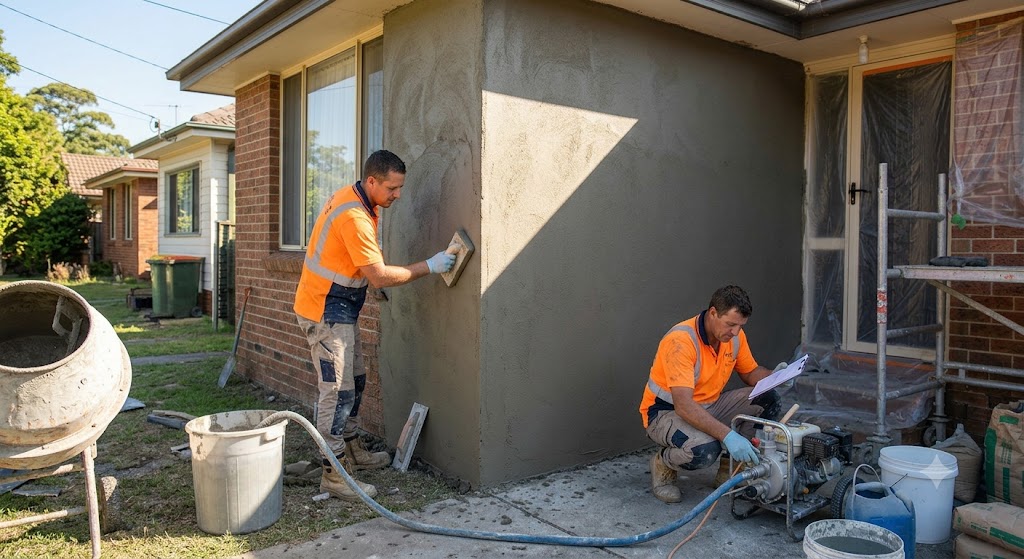
If you’re asking “what is rendering?” — don’t stress, plenty of people do. Rendering is the process of applying a protective and decorative coating — typically made from cement, acrylic, or polymer compounds — over the exterior or interior walls of a building. Think of it as a tailored suit for your home’s walls: it looks sharp, protects against the elements, and adds serious value.
In Sydney’s climate — salty coastal air, blazing summers, wet winters — exposed brick and bare masonry walls cop a hammering year after year. Rendering acts as a shield against moisture, UV damage, and general wear. It’s not just cosmetic. It’s structural care.
Solid plastering is closely related — it refers to traditional hand-applied plaster finishes for interior walls and ceilings, used in bathrooms, living areas, and bedrooms to create smooth, clean surfaces ready for paint or tiling. Where rendering seals and protects, solid plastering refines and finishes.
5 Signs Your Sydney Home Is Screaming for a Renderer
How do you know when it’s time to call in the pros? Keep an eye out for these telltale signs:
- Hairline Cracks That Are Getting Wider A hairline crack here and there is normal — walls breathe and shift slightly with temperature changes. But when cracks start growing, branching, or appearing in clusters, that’s your wall sending an SOS. Untreated cracks allow moisture in, which leads to structural damage, mould, and expensive repairs down the track.
- Bubbling or Blistering Render Moisture trapped behind the render causes the surface to bubble or blister. It looks bad, and it means water is already getting in. This is the stage where cracked render repair becomes urgent, not optional.
- Flaking or Peeling Walls Old render — especially poorly applied or aged cement render — eventually loses its bond with the wall substrate. When it starts peeling away in chunks, you’re well past the “touch-up” phase.
- Staining, Damp Patches, or Efflorescence Those white powdery stains on brickwork? That’s efflorescence — salts migrating to the surface due to moisture movement. It’s a sure sign your external walls need proper weatherproofing treatment.
- Your House Just Looks… Tired Sometimes the damage is purely aesthetic, but that matters too — especially if you’re thinking about selling. A fresh render job can add tens of thousands of dollars to your property’s market value and pulls incredible kerb appeal out of thin air.
If any of those sound familiar, head over to the RDY Group services page to explore your options.
Types of Rendering: Which One Is Right for Your Home?
Not all render is the same, and choosing the wrong type for your property is a common (and expensive) mistake. Here’s a no-fluff breakdown of the main options available in Sydney:
Cement Rendering — The Classic Workhorse
Sand and cement render is the traditional go-to, and it’s been doing the job reliably for decades. It’s mixed on-site from cement, sand, and sometimes lime, then applied in one or two coats directly to the wall substrate.
Best for: Brick homes, solid masonry walls, budget-conscious renovations.
Why Sydney homeowners love it: It’s durable, weather-resistant, and cost-effective. Once sealed with a quality acrylic paint, it creates a hard barrier against moisture penetration — perfect for Sydney’s coastal and suburban conditions.
The one catch: Cement is rigid. Older homes with flexible timber frames or significant wall movement may experience cracking over time. For those properties, there are better options.
Explore our cement rendering service in Sydney for pricing and project details.
Acrylic Rendering — The Modern Performer
Acrylic render blends cement with acrylic resins, creating a coating that’s stronger, more flexible, and far more crack-resistant than standard cement render. It’s available pre-mixed in a huge range of colours and textures, which means no repainting required.
Best for: Modern homes, feature walls, interior accent finishes, coastal properties.
Why it stands out: The acrylic content makes the finish elastic — it moves slightly with the wall rather than cracking under stress. It dries faster, looks spectacular, and the integral colour means your walls stay looking fresh for years without a repaint.
Acrylic wall coating is also ideal for resurfacing older rendered walls that have lost their lustre. If your home is looking a little dull and dated, this is often the single highest-impact upgrade you can make.
Learn more about our acrylic rendering solutions and see the range of finishes available.
Polystyrene Rendering (EPS Cladding) — The Lightweight Champion
Polystyrene or EPS (Expanded Polystyrene) rendering is the newest player in the game, and it’s changing the renovation industry. Polystyrene panels are fixed to the wall, then coated with render — creating an insulated, lightweight cladding system that’s breathable, waterproof, and brilliant at regulating temperature.
Best for: Older brick homes, timber-framed houses, properties needing insulation upgrades.
Why it’s a game-changer for Sydney homes: With energy costs rising, lightweight rendering solutions that improve your home’s thermal performance are increasingly popular. EPS cladding keeps your house cooler in summer and warmer in winter — translating to real savings on electricity bills. It’s also ideal for heritage-era homes that can’t bear the weight of traditional cement coats.
Discover how our polystyrene rendering systems can transform older properties across Sydney.
Bathroom Plastering & Rendering — The Overlooked Interior Hero
Most people think about rendering the outside of their home. But your bathroom walls deal with daily moisture, steam, and heat cycles that wreak havoc on plaster and tile substrates over time. Bathroom walls that haven’t been properly rendered or plastered can harbour mould, delaminate tiles, and cause water damage to adjoining rooms.
Professional bathroom plastering in Sydney involves applying waterproof render bases before tiling — creating a moisture-proof barrier that protects the structural integrity of your wet areas for decades.
Signs your bathroom needs attention: Tile movement or hollow sounds when tapped, mould behind grout lines, soft or spongy walls, cracked tiles that keep cracking back.
Check out our dedicated bathroom rendering service to see what’s involved and get a free quote.
The Rendering Process: Step-by-Step
So how does it all actually happen? Here’s what to expect when RDY Group Rendering rocks up to your property:
Step 1 — Site Assessment and Preparation Our team inspects the walls, checks for existing damage, moisture issues, and surface condition. If there are existing cracks, loose render, or damp patches, these are addressed before a single coat goes on. This prep work is what separates a long-lasting render job from one that fails in two years. Cutting corners here is industry malpractice — and we don’t do it.
Step 2 — Surface Cleaning and Treatment Walls are cleaned, any loose or hollow render is removed (called “cutting out”), and bonding agents are applied where needed. On polystyrene cladding systems, panels are fixed and mechanically fastened to the wall before rendering begins.
Step 3 — First Coat Application (Scratch Coat) The initial base coat is applied and “scratched” with a comb-like tool to create a key (grip) for the second coat. This coat levels out surface irregularities and creates a uniform base.
Step 4 — Second and Finishing Coat The final coat is applied and finished to the specified texture — smooth, sand finish, fine texture, or acrylic aggregate. For acrylic finishes, the colour is integral to this coat, so painting is typically not required.
Step 5 — Curing and Quality Check Render is left to cure properly — rushing this is a common mistake that causes premature cracking. Our team does a final walkthrough to ensure quality, evenness, and a finish you’ll be proud to show the neighbours.
Cracked Render Repair: When You Need It Fast
Not every job requires a full re-render. Sometimes targeted render repair is all that’s needed — and done correctly, it’s virtually undetectable.
Our patch and repair service covers:
- Crack injection and filling for hairline to structural cracks
- Hollow render removal and rebonding
- Patch rendering after plumbing or electrical work
- Re-coating damaged sections after storm or impact damage
- Blending new render to match existing finish
The key is catching damage early. A 2mm crack costs a fraction to repair compared to the damage it causes if water infiltrates the wall cavity for a year or two. Sydney winters — particularly in Western Sydney and the Upper North Shore — can push moisture aggressively into unprotected wall structures.
Our render repair specialists operate across the Sydney metro area with fast turnaround and accurate colour matching.
Why DIY Rendering Is (Almost Always) a Bad Idea
We’re not going to judge you — plenty of Sydneysiders have given it a crack (no pun intended). But professional rendering is a skilled trade for very good reasons:
Mix ratios matter enormously. Too much water and the render shrinks and cracks. Too little and it won’t bond. The right consistency varies depending on temperature, humidity, and the substrate — knowledge that comes from years of experience, not a YouTube tutorial.
Surface prep is everything. Most DIY render failures happen not because the render is bad, but because the prep was inadequate. Old paint, dust, grease, or moisture on the surface will cause even premium render to fail.
Finishing is an art. A smooth render finish that looks clean and professional requires hundreds of hours of practice. An uneven, patchy finish is very hard to hide — and even harder to fix without starting over.
Unless you’re a qualified plasterer, the cost of fixing a DIY job usually exceeds what you would have paid for professionals in the first place.
Why RDY Group Rendering Is the Right Call for Sydney Homeowners
There are plenty of renderers in Sydney — we know, we’ve seen the competition. Here’s what sets RDY Group Rendering apart:
15+ Years of Active Sydney Experience We’ve rendered homes across every Sydney suburb — from Federation-era terraces in the Inner West to modern double-storeys in the Hills District. We understand the soil movement, architectural styles, and climate conditions that affect render performance in different parts of Sydney.
Full-Service Capability From a small bathroom plastering job to a whole-house polystyrene cladding and acrylic coat — we handle it all under one roof. No subcontracting, no handoffs, no excuses.
Fully Licensed and Insured Every job is covered by full public liability insurance. You’re protected, your property is protected, and our crew operates to Australian building standards throughout.
Transparent, Affordable Pricing We offer free inspections and fixed-price quotes upfront. No surprises. No “we found extra work once we started.” What we quote is what you pay — and our rates are structured to be competitive without compromising on materials or craftsmanship.
Real Sydney Clients, Real Results Don’t take our word for it. Wander over to our project portfolio and see actual homes we’ve transformed across the Sydney metro area. Before-and-after comparisons speak louder than any marketing claim.
Frequently Asked Questions About Rendering in Sydney
How long does rendering last? A well-applied cement render lasts 20–30 years. Acrylic systems typically have even longer lifespans when maintained. The biggest killer of render longevity is poor prep and cheap materials — which is why choosing the right team matters.
How much does rendering cost in Sydney? Costs vary based on surface area, material choice, access requirements (scaffolding for double-storeys), and surface prep needed. Cement render is generally the most affordable option. Acrylic and polystyrene systems cost more upfront but offer longer life and better performance. Contact us for a free inspection and quote.
Can I paint over existing render? Yes — and this is often a cost-effective refresh option for render that’s structurally sound but looking tired. We can advise whether a repaint is sufficient or whether re-rendering is the better long-term investment.
How long does a render job take? A standard single-storey home exterior typically takes 3–5 days depending on complexity, access, and the system being applied. Curing time adds another few days before painting can occur.
Do you service my suburb? We cover the Sydney metropolitan area extensively — check our blog for suburb-specific guides, or simply get in touch and we’ll confirm availability in your area.
Ready to Give Your Home the Walls It Deserves?
Your walls have been patient. Now it’s time to return the favour.
Whether you’re dealing with cracked render that’s been annoying you for years, planning a full exterior makeover, upgrading your bathroom with proper waterproof plastering, or exploring lightweight cladding options to insulate an older home — RDY Group Rendering has the expertise, the crew, and the track record to deliver results you’ll be proud of.
We offer free inspections and no-obligation quotes across Sydney. There’s zero commitment to making the call, but there’s a very good chance you’ll be glad you did.
📞 Call us on 0432 095 861 📍 Proudly servicing the Sydney Metropolitan Area 👉 Book your free inspection here.


